The Best Seasonal Color for North Carolina Commercial Properties
The Best Seasonal Color for North Carolina Commercial Properties
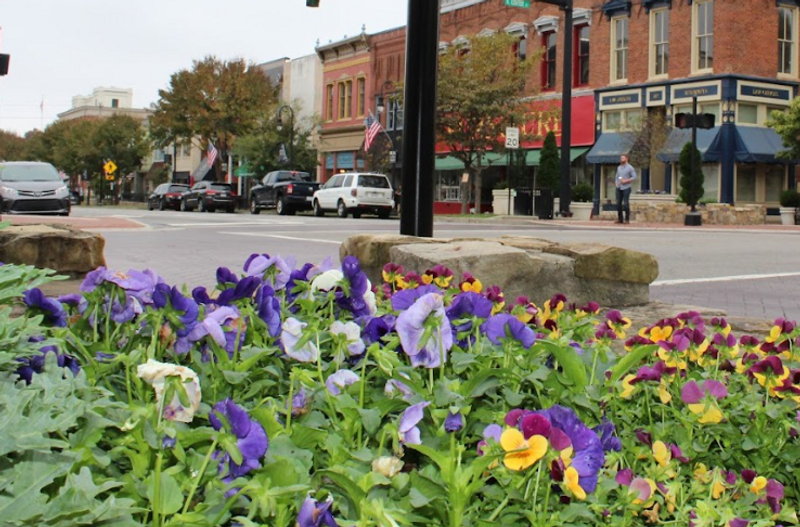
A prospect pulling into your parking lot already has opinions popping into their head before they open their car door. So does every tenant, appraiser, and customer who visits your property.
For commercial properties, curb appeal affects tenant retention, lease rates, foot traffic, and appraisals. And quality landscaping is linked to a 10-15% lift in perceived property value.
That’s why we’re talking about adding seasonal color. It delivers some of the highest ROI in any commercial landscape. Since 1999, Tim Johnson Landscaping has built expertise on annual plant palettes for North Carolina. We source quality plant material for better root establishment and longer bloom cycles. Changeovers happen before plantings decline, so your property never looks tired.
The sections below cover top-performing spring annuals for the Piedmont, North Carolina, and Upstate South Carolina regions. Find out what to look for with these installations, including one key task most landscape companies fail to focus on.
Why Charlotte Commercial Properties Need Seasonal Color
Exterior appearance ranks among the top factors prospects mention during property tours. For retail, colorful flowers at entrances show that a location is active and thriving. Dull or declining beds do the opposite. For medical, hospitality, and Class A offices, entrances affect brand perception for the tenants' businesses.
Occupancy rates, lease renewal rates, and asking price per square foot correlate with a building’s outdoor appearance. Professional landscaping, including seasonal color, is factored into CAP rate assessments and appraisals.
Annual Flowers vs. Only Using Perennials
Advantage | Annuals | Perennials |
Bloom Duration | Flower continuously for an entire season — bred specifically for non-stop color | Bloom for 2–6 weeks per year, then revert to foliage or go dormant |
Instant Impact | Full color and visual mass from day one of installation | Can take 2–3 years to establish a full, lush appearance |
Design Flexibility | Palette can be completely changed every season to keep the property looking fresh | Locked into the same plants and colors year after year once established |
Seasonal color is also one of the most cost-effective ways to make properties more inviting. Compared to hardscape or structural improvements, it's a low investment that delivers major visual return.
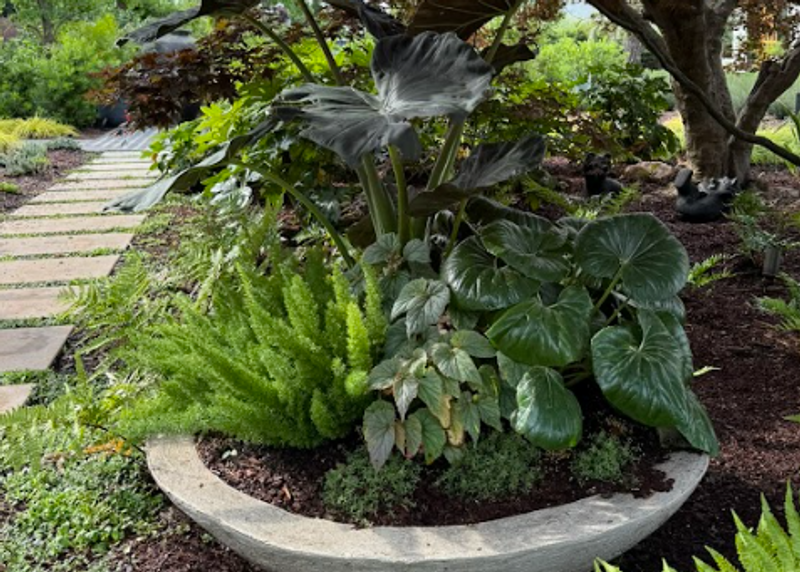
Soil Prep: The Most Overlooked Seasonal Planting Step
Poor plant performance isn’t usually a problem with the plants themselves. It's more likely the soil they’re struggling to survive in.
Landscape bed and container soil can cause plant decline due to the following:
Being compacted by foot traffic and equipment
Previous plantings depleted soil nutrients
Clay-heavy from previous construction grading
When annuals’ roots reach poor soil, they can quickly decline and take the entire plant down with them. The plant may even look fine for a few weeks, then quickly become unhealthy when high temperatures arrive with no deep roots to sustain the plant.
Professional soil prep is the work that matters so much with seasonal plant installations. But this step rarely gets noticed. What property owners do notice are the beautiful results that top-notch soil creates.
The soil is often referred to as the foundation of life. ~Clemson Cooperative Extension
TJL's Unique Soil Preparation Process
Tilling 6–8 inches deep to break up compacted soil and free the full active root zone before any plant is installed.
Adding organic amendments improves drainage in clay-heavy Carolina soils, moisture retention in sandy soils, and feeds microbial activity that supports healthy root development.
Slow-release granular fertilizer added during tilling feeds plants continuously for 3–4 months without repeat applications.
Osmocote is a product designed with temperature-activated granules that release nutrients when soil warms to match peak plant demand.
Biospectrum is used to extend the plant's effective root zone so it can reach water and nutrients it otherwise could not.
Most landscape providers in Charlotte and Statesville use standard fertilizers in combination with seasonal installs. However, very few companies focus enough on soil prep, which makes all the difference with plant roots and long-term resilience.
Paying attention to the details has earned Tim Johnson Landscaping Statesville’s Best Landscaper Award multiple times.
TJL's Seasonal Color Process
Commercial property managers shouldn’t have to learn landscape design theories. They know they want their properties to look fantastic. Tim Johnson Landscaping’s job is to turn their goals into a plan.
The seasonal color consultation aims to understand the property and the client needs. The following client input is helpful:
Brand colors
Any colors to avoid
Bold and vibrant preference or soft and neutral
Our team provides recommendations with simple input like that.
From there, every bed and container can be built around our proven framework. Possibilities include a thriller (tall focal point), filler (mid-height volume), and spiller (trailing edge plants). These planting strategies produce the layered and intentional look clients want.
At TJL, all spring flower installations are documented (e.g., bed dimensions, plant quantities, specific varieties, and site notes). This ensures consistency year after year while supporting properties that need to scale across multi-building portfolios.
For clients with brand color requirements, our team can work from brand guides or logo palettes to select complementary plantings.
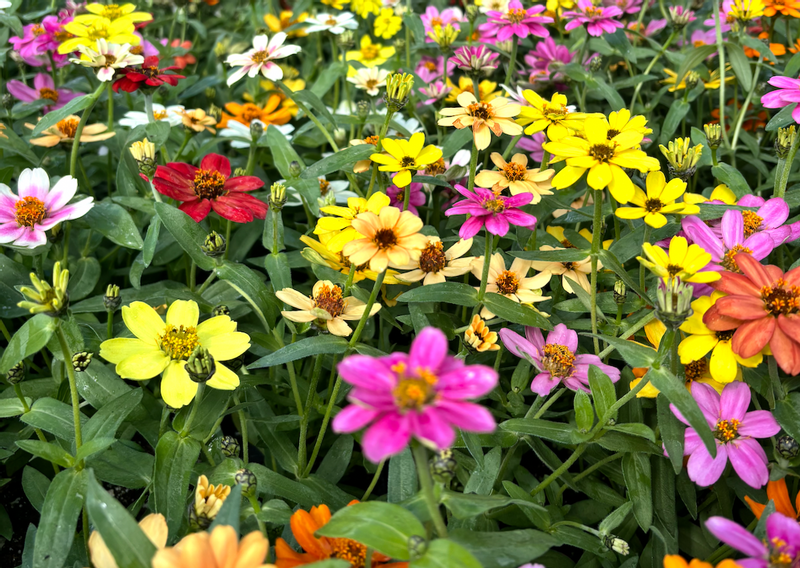
The Best Spring Color Palette for North Carolina & Upstate South Carolina
Over the years, our team has tested several spring combinations specifically for properties in Statesville, Charlotte, Greenville, etc. Six plant mixes have become our go-tos for visual appeal, plant health, and longevity.
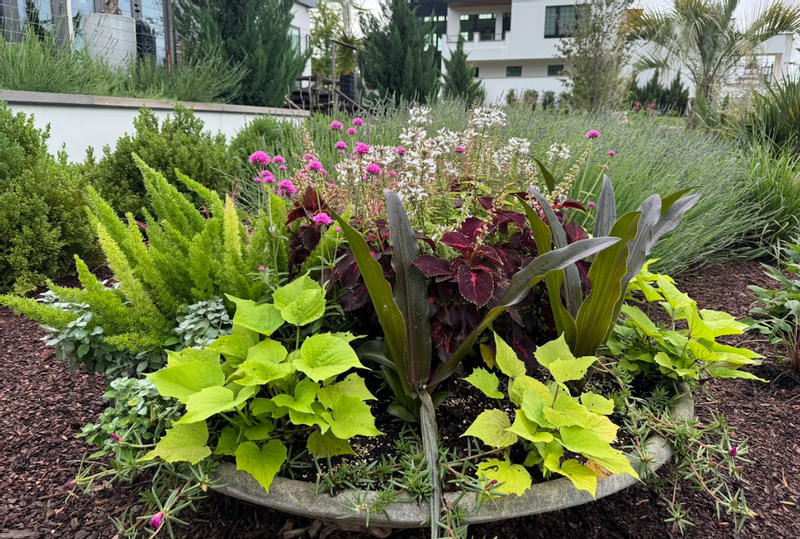
See some real-world examples of these mixes below.
What if a primary plant is unavailable at planting time? A quality alternative species is already on the books. Together, these attractive spring plant mixes cover the full range of commercial site conditions in the Charlotte and Statesville area.
Advantages of Plant Containers
Ground beds naturally have more constraints than containers, which go anywhere, including:
Covered entryways
Rooftop terraces
Courtyards
Every plant container can have its own micro-design too. A single oversized container at an entrance makes a handsome statement that isn't always available with ground beds. We recommend the largest pots possible for maximum impact and customization.
Working with Existing Containers
An experienced landscape provider should evaluate what's already on your property for drainage, size, and structural condition. 18–24" diameter is a nice planter size for walk-up settings, while entryway containers are often 24–36". When new containers are needed, there are numerous material types available depending on your sustainability goals and what fits your building colors.
Soil health is defined as the capacity of soil to function as a vital living system that sustains productivity, maintains environmental quality, and enhances plant health. ~NC State Extension
Drip Irrigation
Containers dry out fast during North Carolina’s spring-to-summer transition. Without irrigation, daily hand-watering adds labor costs. The solution is drip irrigation, as it delivers low-volume water directly to plant root zones.
These water lines can be routed along wall bases, under mulch, and through the back of planters for clean installs that also avoid tripping hazards.
Annual Plants Ordering & Rotation Calendar
Top-quality annuals aren't pulled from average garden center shelves. They're grown to order at local wholesale nurseries on a production schedule set months in advance. The plant installed in April began growing in January.
This seasonal timeline is critical. Ordering your annuals too late can mean settling for whatever varieties are left, not what you would prefer for your property. That's how a carefully thought-out plant palette can get compromised.
Key North Carolina Seasonal Flower Timelines (4 Rotations):
Early Spring
Order: January–February
Install: Late February–March
Cool-season varieties shine until heat arrives
Summer
Order: March–April
Install: Late May–June
Heat-tolerant varieties carry through peak summer
Fall
Order: July–August
Install: Late September–October
Transitional cool-season varieties to thrive through first frost
Winter
Order: September–October
Install: November–December
Cold-hardy varieties run through February–March
The 2-Rotation System:
Install: Late March–April. Choose heat-tolerant varieties that bridge spring and summer
Install: Late September–October. Cool-season plant palette carries through February–March
A well-managed property typically has intentional flower colors 12 months a year. TJL clients have all their rotation timing managed, and the property managers receive advance notice without any tracking required on their end. Seasonal budgets play a role too.
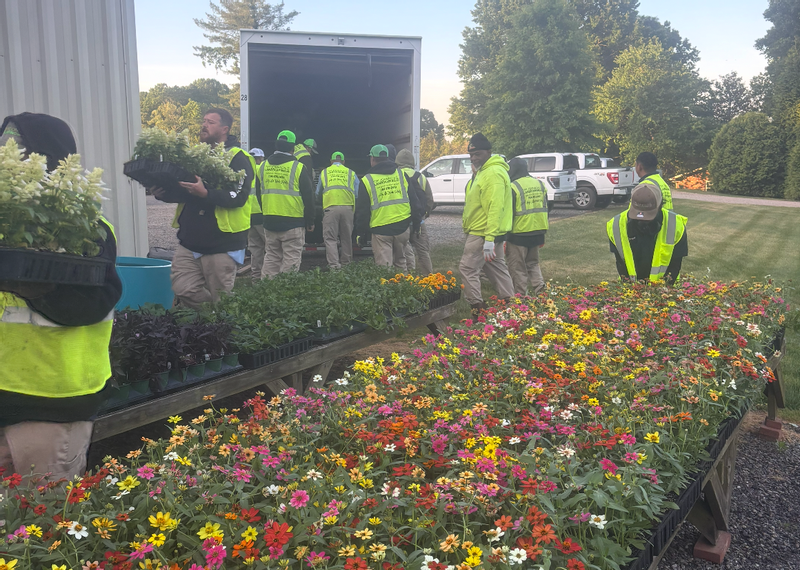
Keeping Seasonal Color Looking Sharp All Season
Of course, installation is only the beginning. What separates a commercial property that looks great in April and beyond from one that fades by June is what happens with weekly maintenance.
First, there is the weekly fertilizer, and fungicide. Slow-release amendments in the soil provide the foundation, but annuals need supplemental feeding during peak growth and bloom. Formulations change as the season moves along. Examples below:
Higher phosphorus early to push root establishment
Balanced NPK at peak bloom
More potassium in late season to shield plants from heat stress
With the Charlotte area’s humidity, your plants will face persistent disease pressure. Preventative fungicide applications are far more effective than reactive treatments.
Another key maintenance task is deadheading. A spent bloom left on the plant triggers seed production, which robs new flowers of energy. Weekly deadheading of spent blooms keeps cool-season annuals (pansies, snapdragons, dianthus) productive for the full season. Warm-season varieties vary because some modern cultivars are self-cleaning and others need regular attention.
Next on the seasonal color maintenance list is weekly weeding. Healthy soil makes desirable plants grow faster, but weeds benefit as well. So, regular hand-weeding is a must to keep weeds from making your annual beds and containers unsightly while robbing plants of water and nutrients.
Even with vibrant flowers, a weed-filled bed can make people see the property as messy.
Proper Watering Techniques
Deep, infrequent watering for in-ground beds and potentially daily for containers in summer heat.
Morning watering only, as wet foliage overnight invites fungal disease in our Piedmont climate.
Maintaining 2–3 inches of mulch reduces evaporation and extends watering intervals.
The ROI of Seasonal Color
People make unconscious judgments about a property within seconds of arrival. Vibrance, cleanliness, and maintenance quality inform those instant impressions.
For retail tenants, well-kept outdoor spaces highlight true ownership investment. And obviously, that feeling can increase the odds of tenants renewing in properties where the landlord shows care.
With professional offices, curb appeal impacts their clients' experience even as they drive by in their vehicles. For medical properties, a well-kept exterior provides evidence of competence and attention to detail. Finally, hospitality businesses benefit from the right seasonal color because it’s often the first brand touchpoint a guest sees.
Seasonal Color as a Competitive Differentiator
In areas where there’s little difference in architecture, the building with eye-catching plants and appealing blooms wins the visual competition. Property managers with seasonal color strategies have a legitimate point of differentiation during tours. Not to mention visual appeal that can be used in their marketing materials and shows up in tenant retention and reviews.
A professionally-planned installation also shows your prospects that the property management team is proactive, which implies being proactive in other critical ways too.
Getting the Most From Your Budget
Dull landscape beds or forgotten container plants cause perceived value to drop.
Focus on high-visibility areas to get the most out of a tighter seasonal color budget.
Containers give you flexibility with costs, annual choices, and planters can be moved as needed.
Getting Seasonal Color Going
It’s simple to get started with your seasonal color installation. We do a site assessment, choose one of our go-to mixes that fits your property, inspect the irrigation system, and get your plants ordered.
From selecting the plant palette to soil prep to installation and weekly maintenance, our team will work to ensure your property looks its best this spring and each season that follows.
Contact us today to get started building your plant palette. Tim Johnson Landscaping offers a no-pressure seasonal color consultation with a site walkthrough to assess your beds, containers, and entry points to deliver a custom recommendation.
FAQ: Seasonal Flower Rotations in North Carolina & Upstate South Carolina
When should commercial properties in the Piedmont, North Carolina area plant spring annuals?
Most spring annuals go in the ground between late March and mid-April in the Piedmont, NC and Upstate SC region, once the threat of frost has passed. The exact timing depends on your specific location — properties in Charlotte and the surrounding metro can often plant a week or two earlier than those in higher-elevation Upstate SC areas like Greenville or Spartanburg.
How far in advance does TJL order spring annuals?
TJL orders spring annuals in January and February — roughly 2 to 3 months before planting. That's because we have flowers custom-grown specifically for our clients. The February order deadline ensures your property gets the exact colors, varieties, and quantities needed for a polished, cohesive look.
Do commercial properties need a design ready before starting a seasonal color program?
Not at all. Most commercial clients don't come in with one. A good seasonal color provider will document your beds, note dimensions, and use proven mixes that perform well in the Carolinas’ climate. Colors can also be customized to match your brand or seasonal themes.
What's the difference between annuals and perennials, and which is better for commercial properties?
Perennials come back each year but bloom for only a limited window, leaving gaps in color throughout the season. Annuals bloom continuously from install through rotation, giving commercial properties the consistent, vibrant curb appeal that makes a strong impression on tenants and visitors.
Can seasonal color work for properties that only have planters?
Yes. Containers and planters actually allow for more customization than ground beds. A qualified provider can work with your existing pots or help source new ones, install drip irrigation to keep them healthy, and add hanging baskets at entrances and high-traffic areas for extra visual punch.
What kind of ongoing maintenance does a seasonal color program require?
A professional plan includes weekly fertilizing, fungicide application, deadheading, and weeding. Spring annuals are deadheaded as needed to extend blooms, and proper soil prep at install reduces the maintenance. Skipping the soil prep step is one of the most common reasons annual flowers underperform.
3 Key Takeaways
1. Spring annuals for commercial properties in the Piedmont must be ordered by February and installed by mid-April.
2. The most common reason annual flowers underperform on commercial properties is poor-quality soil.
3. Unlike perennials, which bloom for a few weeks then go quiet, annuals deliver continuous color from installation through rotation.