Do Retention Ponds Need Maintenance in North Carolina?
Do Retention Ponds Need Maintenance in North Carolina?
Picture this: a property manager sits down with their morning coffee, ready to tackle the day's agenda, when they notice an envelope from the city marked urgent. Inside is a letter informing them that the recent inspection of the retention pond on their property has failed, alongside a mandate for costly repairs. The unexpected expense looms large, casting a shadow over their carefully planned budget.
Retention ponds and stormwater systems often go unnoticed until moments like these arise, prompting owners to ask urgent questions about sudden five-figure repairs.
Many property managers assume stormwater BMPs "take care of themselves" as long as they look acceptable from a distance. It's an understandable belief, stemming from the perception that these systems are durable and low-maintenance. However, in North Carolina, that assumption can quietly turn into a compliance issue, a safety concern, and a costly remediation project.
Stormwater BMPs are regulated systems, not passive landscape features. When they aren’t properly maintained and documented, municipalities get involved, timelines tighten, and flexibility disappears. Understanding what’s required and what happens when maintenance is deferred can make the difference between predictable operating costs and reactive emergency spending.
Do Retention Ponds Need Maintenance in North Carolina?
Yes. Retention ponds and other stormwater Best Management Practices (BMPs) in North Carolina are required to be maintained and documented on an ongoing basis.
These systems are permitted infrastructure designed to manage runoff, capture sediment, and protect downstream waterways. They rely on:
Functional vegetation
Stable embankments
Clear outlet structures
Adequate storage capacity
Without routine maintenance, stormwater BMPs no longer function as designed—regardless of how they look from the road.
Who Is Responsible for Stormwater BMP Maintenance on Commercial Properties?
In most cases, responsibility lies with the property owner or the entity managing the site, often the property manager acting on their behalf.
Municipalities regulate stormwater systems, but they do not maintain them. This is where confusion often arises. A contractor may mow pond banks, but mowing alone does not meet stormwater BMP requirements. True compliance involves inspections, documentation, and maintenance aligned with the original stormwater permit.
For many property managers, stormwater responsibility becomes one more task layered onto an already full plate, which is why experienced partners matter.
What Happens If a Retention Pond Fails Inspection?
When a retention pond or stormwater BMP fails inspection, municipalities typically issue a notice requiring corrective action within a defined timeframe. Receiving such a notice is often just the beginning. Consultants are quickly called in to assess the damage and propose solutions, while tenants and stakeholders are alerted about potential disruptions. Budgets can become frozen as financial resources are redirected to cover unexpected costs, leading to a scramble to reallocate funds from other projects. This domino effect creates a sense of urgency and high stakes, as the clock ticks down to compliance deadlines and the pressure to resolve issues mounts.
If issues aren’t resolved promptly:
Additional inspections may be required
Engineers or consultants may become involved
Repair scopes expand
Costs increase significantly
Once enforcement begins, property owners lose control over timing, vendors, and budgets. What could have been addressed proactively turns into a reactive compliance project.
Why Neglecting Stormwater BMP Maintenance Gets Expensive
Deferred stormwater maintenance does not eliminate costs; it concentrates them. For example, $4,500 in annual upkeep can prevent the need for costly measures like $65,000 in dredging after five years of neglect. Highlighting these numbers crystallizes the value proposition for consistent maintenance.
Sediment buildup reduces pond capacity. Woody vegetation weakens embankments. Erosion accelerates structural failure. Over time, routine maintenance gives way to dredging, regrading, or full system restoration.
We’ve seen properties spend tens of thousands of dollars restoring retention ponds that could have been maintained annually for a fraction of the cost. Proactive maintenance keeps stormwater expenses predictable and supports long-term planning—an approach that aligns with broader site budgeting strategies outlined in
How to Build a Commercial Landscaping Budget That Delivers Value All Year.
What North Carolina Actually Requires
North Carolina provides formal Operation and Maintenance (O&M) requirements for stormwater BMPs, including wet detention basins. These requirements outline:
Inspection frequency
Maintenance responsibilities
Ongoing documentation expectations
Stormwater compliance isn’t a one-time approval—it’s an ongoing obligation. Missing records or skipped maintenance can trigger enforcement even if a pond appears visually acceptable.
How Tim Johnson Landscaping Manages Stormwater BMPs
Stormwater BMP maintenance is a core strength at Tim Johnson Landscaping. Our approach goes far beyond mowing pond banks.
Through our Commercial Stormwater Management services, we provide:
Routine inspections based on BMP type
Vegetation management aligned with stormwater function
Sediment and erosion monitoring
Completion and submission of North Carolina O&M forms on behalf of clients
Just as important, we prioritize proactive communication. Stormwater systems only stay compliant when expectations are clear, and issues are addressed early—an approach rooted in the principles outlined in
Why Communication Is the #1 Factor in Landscape Partnerships.
Safety on Slopes: Why Equipment Choice Matters
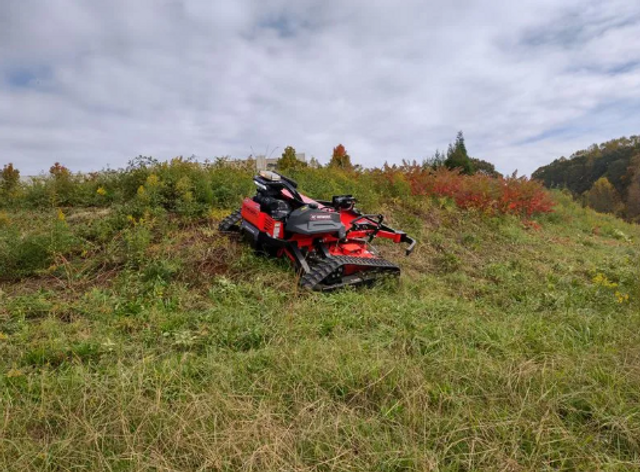
Retention ponds often feature steep, wet embankments, which can be among the most hazardous areas in landscape maintenance.
Rather than putting crews at risk, TJL invests in specialized, remote-controlled slope mowing equipment. This technology allows our team to safely maintain challenging pond slopes while keeping people off unstable ground.
Responsible stormwater management isn’t just about compliance. It’s about protecting people, properties, and long-term outcomes.
Case Study: When Deferred Maintenance Catches Up
We’ve stepped into properties where retention ponds hadn’t been touched for years. In one industrial example, trees had grown throughout the basin, sediment had reduced capacity, and access was severely limited. It took weeks just to regain control before routine maintenance could begin. The prolonged effort of over three weeks required substantial contractor mobilization, costing tens of thousands of dollars. These unforeseen expenses highlighted the steep price of deferring routine maintenance.
In another case, a developer faced hundreds of thousands of dollars in stormwater remediation costs before being allowed to proceed with construction. Proactive maintenance would have preserved both budget flexibility and project timelines.
By contrast, properties with consistent stormwater programs experience smoother inspections, fewer surprises, and significantly lower long-term costs.
Stormwater Costs Are Predictable—If You Plan for Them
Municipalities require stormwater maintenance cost estimates and bonds because long-term upkeep is expected. These costs already exist, whether they’re actively managed or not.
When stormwater maintenance is integrated into a comprehensive landscape strategy, it supports curb appeal, safety, and operational stability—factors that directly influence tenant experience and retention, as discussed in
How Professional Landscaping Increases Tenant Retention.
Frequently Asked Questions About Retention Pond Maintenance
Do retention ponds need to be maintained in North Carolina?
Yes. Retention ponds are regulated stormwater BMPs and require routine maintenance, inspections, and documentation.
Who is responsible for stormwater BMP maintenance?
Responsibility typically lies with the property owner or property manager, not the municipality.
What happens if a retention pond fails inspection?
Failed inspections can result in notices, required corrective action, increased oversight, and higher costs.
How often do retention ponds need maintenance?
Maintenance frequency depends on BMP type, but most require regular inspections, vegetation management, and sediment monitoring throughout the year.
How much does retention pond maintenance cost?
Proactive annual maintenance costs significantly less than remediation or dredging caused by long-term neglect.
Is mowing enough for retention pond maintenance?
No. Mowing alone does not meet stormwater BMP requirements.
Can a landscaper manage stormwater BMP inspections and paperwork?
Yes, if they have stormwater expertise. Qualified partners can inspect, document, and submit required forms.
What causes sediment buildup in retention ponds?
Stormwater runoff, erosion, and upstream site activity contribute to sediment accumulation over time.
Are retention pond slopes considered a safety risk?
Yes. Steep or wet embankments pose fall and equipment hazards without proper methods and equipment.
Why do municipalities issue stormwater violation notices?
Notices are typically issued due to failed inspections, missing documentation, erosion, or non-functional BMP components.
Stormwater Is a System—Not a Checkbox
Stormwater BMPs protect more than compliance. They protect property value, safety, and long-term operational stability.
When managed proactively, they stay out of the spotlight and function as intended. When ignored, they demand attention at the worst possible time.
If your property includes retention ponds or stormwater systems and you’re unsure where you stand, a proactive evaluation today can prevent costly surprises tomorrow. At Tim Johnson Landscaping, we believe stormwater management should be intentional, documented, and integrated into the bigger picture of landscape stewardship—not treated as an afterthought.
To take the first step, we invite you to schedule a complimentary stormwater audit with us within the next 48 hours. This time-sensitive offer ensures that you receive the attention and expertise needed to secure your property's compliance and sustainability. Don't miss this opportunity to transform awareness into action.